A really nice place! Federico, who served us, was very polite and funny. He recommended some cocktails, and they were absolutely delicious. Great atmosphere and friendly service — we’ll definitely come back!
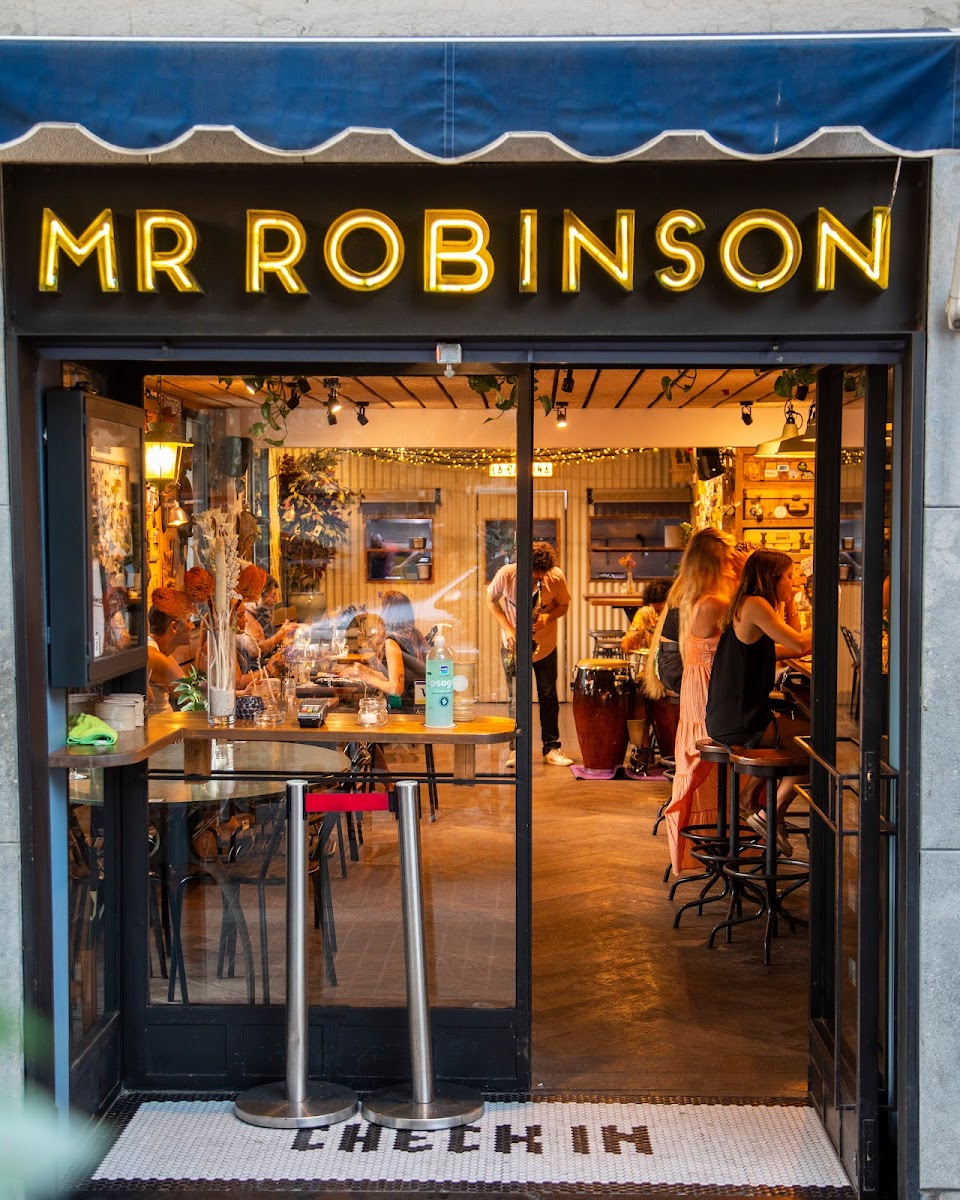
Overview
Walking down Pla de Palau in Ciutat Vella, there’s a moment when the buzz of the Port Vell area fades just enough for you to notice the smell of butter, coffee, and something slow-cooked drifting from number 16. That’s where Mr Robinson quietly does its thing, and after several visits spread over the past year, it’s become one of those places I recommend without hesitation when friends ask where locals actually eat.
The first time I stopped in, it was early afternoon after a long walk through El Born. The menu didn’t try to impress with trendy buzzwords. Instead, it leaned into comfort food with confidence-proper brunch plates, well-balanced lunches, and desserts that feel intentional rather than decorative. I ordered what the server described as their most-requested dish, a slow-braised beef sandwich with house-made sauce. When it arrived, it was clear why it shows up in so many reviews. The meat fell apart without effort, the bread held everything together, and nothing felt overworked. That balance is harder to pull off than it looks.
What stands out here is process. Dishes aren’t rushed. Proteins are cooked low and slow, sauces are reduced in-house, and even the salads show attention to texture and seasoning. According to data published by the Spanish Hospitality Federation in 2024, more than 60% of diners in Barcelona now prioritize ingredient quality over portion size, and this place clearly gets that shift. You feel it in the food, especially in the vegetarian options, which are treated as full dishes rather than afterthoughts.
On a later visit, I came back with a friend who works in food service. She immediately noticed the open kitchen workflow. Orders move efficiently without chaos, which usually means the team has clear systems in place. That consistency shows up plate after plate. Whether it’s a weekday lunch or a busy Saturday brunch, the experience doesn’t wobble. Restaurants that manage that level of reliability often score higher in long-term customer trust, something organizations like the Michelin Guide and Barcelona Culinary Hub repeatedly highlight in their evaluations of sustainable dining operations.
The location plays a role too. Being set at Pla de Palau, 16, Ciutat Vella, 08003 Barcelona, Spain puts it at a crossroads between tourist paths and residential streets. You’ll hear multiple languages around you, but the room never feels like it’s catering to just one crowd. Locals pop in for coffee, remote workers settle with laptops, and travelers linger over brunch. That mix gives the space a relaxed, lived-in energy that’s hard to fake.
Service deserves its own mention. Staff know the menu well and don’t oversell. On one visit, I asked about allergens, and the response was immediate and precise. That aligns with current EU food transparency standards, which require clear allergen communication, but not every restaurant handles it with the same ease. Here, it feels natural, which builds trust quickly.
If there’s a limitation, it’s space. Seating is comfortable but not expansive, so peak hours can mean a short wait. That said, turnover is steady, and the wait rarely feels wasted. Most regulars seem to expect it, which says a lot about perceived value. In online reviews across major dining platforms, comments often mention consistency, generous portions, and a menu that feels honest. Those themes match my own experience closely.
This isn’t a place chasing culinary awards or viral trends. It’s a restaurant that understands its neighborhood, respects its ingredients, and delivers food people genuinely want to eat again. When a diner manages to combine solid technique, thoughtful service, and a clear sense of identity, it earns loyalty the old-fashioned way-one well-cooked plate at a time.
Good to know
Service options
✓ Outdoor seating ✓ Dine-in ✓ DeliveryHighlights
✓ Great beer selection ✓ Great cocktails ✓ Great coffeePopular for
✓ Lunch ✓ Dinner ✓ Solo diningAccessibility
✓ Wheelchair-accessible entrance ✓ Wheelchair-accessible seating ✓ Wheelchair-accessible car parkOfferings
✓ Alcohol ✓ Beer ✓ Cocktails ✓ Coffee ✓ Late-night food ✓ Quick bite ✓ Small plates ✓ Spirits ✓ WineDining options
✓ Breakfast ✓ Brunch ✓ Lunch ✓ Dinner ✓ Dessert ✓ Seating ✓ Table serviceAmenities
✓ Bar on site ✓ ToiletAtmosphere
✓ Casual ✓ Cosy ✓ TrendyCrowd
✓ Groups ✓ Tourists ✓ University studentsPlanning
✓ Accepts reservationsPayments
✓ Credit cards ✓ Debit cards ✓ NFC mobile payments ✓ Credit cardsChildren
✓ High chairsParking
✓ Paid parking lot ✓ Paid street parking ✓ ParkingPhotos
1 / 4
Location
Reviews
- No ratings yet 2856 reviews
Excellent food with good portions. Friendly and accommodating staff - especially Fede!!
We just stopped in to this bar as we were walking by and we are so glad we did! Bartenders were super friendly and they know how to make a drink like nobody’s business! We had a draft beer and three espresso martinis, and they were lights out! Awesome place, and I would highly recommend it for anyone looking for a chill bar in Barcelona!
We came because we heard music. Food was great, DJ played good music, atmosphere was excellent, I liked it! Only bad was when we realized that even though the sign at the entrance said today sangria is €6 -but we were charged €8... nachos and 2 beers - also didn't get the promo price but the regular price, even though the sign says it's a promotion. It's a shame that you spoiled a really great impression!
This place is perfect to have an awesome brunch and being surrounded by people. Their decoration is about travel destinations and people around the world with stylish wooden furniture and colourful walls. They offer a fresh-quality food and a very tasty flavour. We ate a delicious salmon & herb cream bagel, a Benedict eggs with spinach, avocado and bacon and at last but not least, one of the most perfect French’s toast that we’ve ever tried. The staff was very friendly and helpful all the time. I’d strongly recommend that place during your stay in Barcelona to enjoy a fantastic brunch or drink one of their cocktails.
This is a great bar! They serve food during the day and early evening (which was delicious), but at night it turns into a party bar with amazing music At night has an entry of 10 euros per person with 2 drinks included (beer, wine or mimosa) It has mixed visitors: locals and tourists.. and it is great for meeting new people.. good vibes!
I came here with my boyfriend on a Sunday night and had such a fun time! Our margaritas were reasonably priced at 10 Euros and very tasty. The music was also a vibe! Heads up: each night they have a dedicated genre.
Waiters are nice but in my situation, the food order was wrong and on the second order my drink was forgotten, had to re-order to another waiter . They have really good cocktails. As I mentioned, food order was wrong but we ate it anyway. It was ok. Apparently they have really tasty burgers, which will be my next try. These small mistakes I didn't take it in a bad way, season was long and I can imagine how tired they are. Atmosphere is excellent. Definitely going back there!